Full-mouth rehabilitation: rebuilding worn or failing teeth
Complex dental problems become manageable when diagnosis, priorities and treatment are divided into carefully tested phases.

Dr. Suneeta Veeramachaneni
10 September 2026 · 7 min read
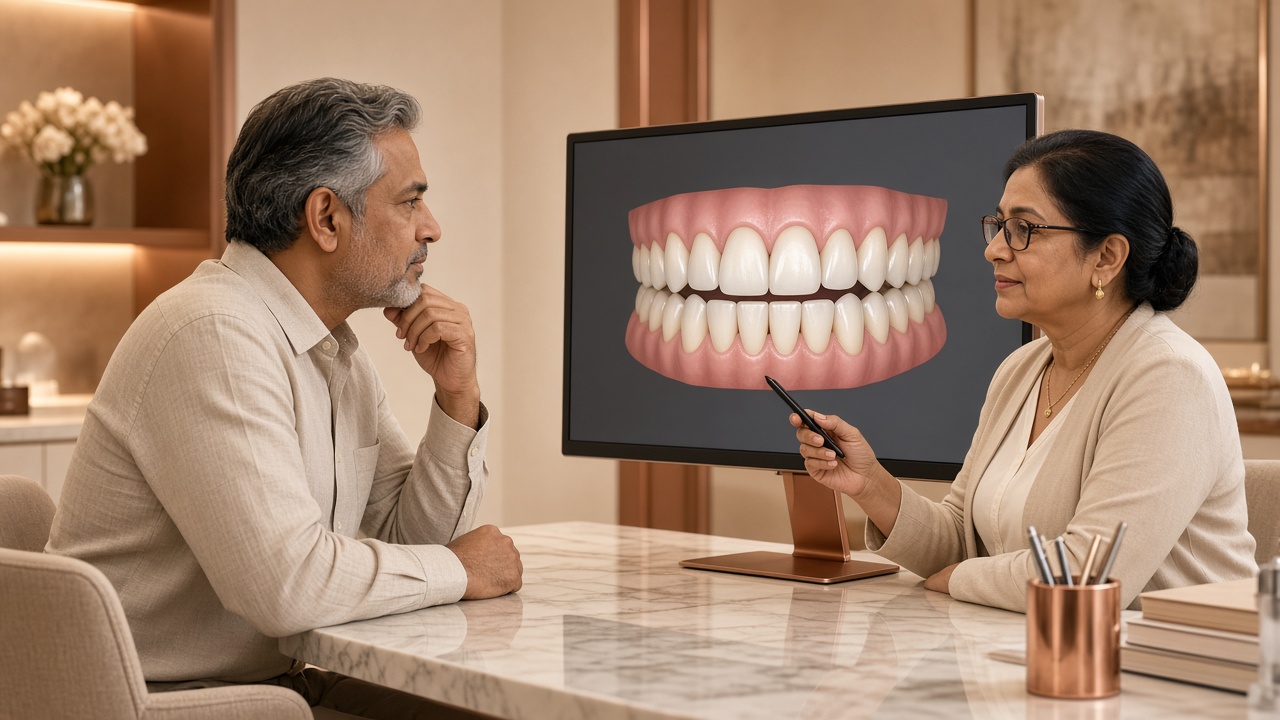
Full-mouth rehabilitation is a coordinated plan for multiple worn, broken, decayed or missing teeth. It is not a standard package of crowns. The aim is to restore health, comfortable function and a natural appearance while preserving as much sound tooth structure as possible.
Diagnosis before design
Records may include photographs, X-rays, digital scans, bite analysis and gum assessment. The dentist also considers jaw comfort, tooth wear patterns, saliva, reflux, diet, grinding and previous treatment failures.
Active infection and gum disease are controlled first. Teeth with uncertain prognosis are assessed before final restorations so that the plan is built on stable foundations.
A phased and testable plan
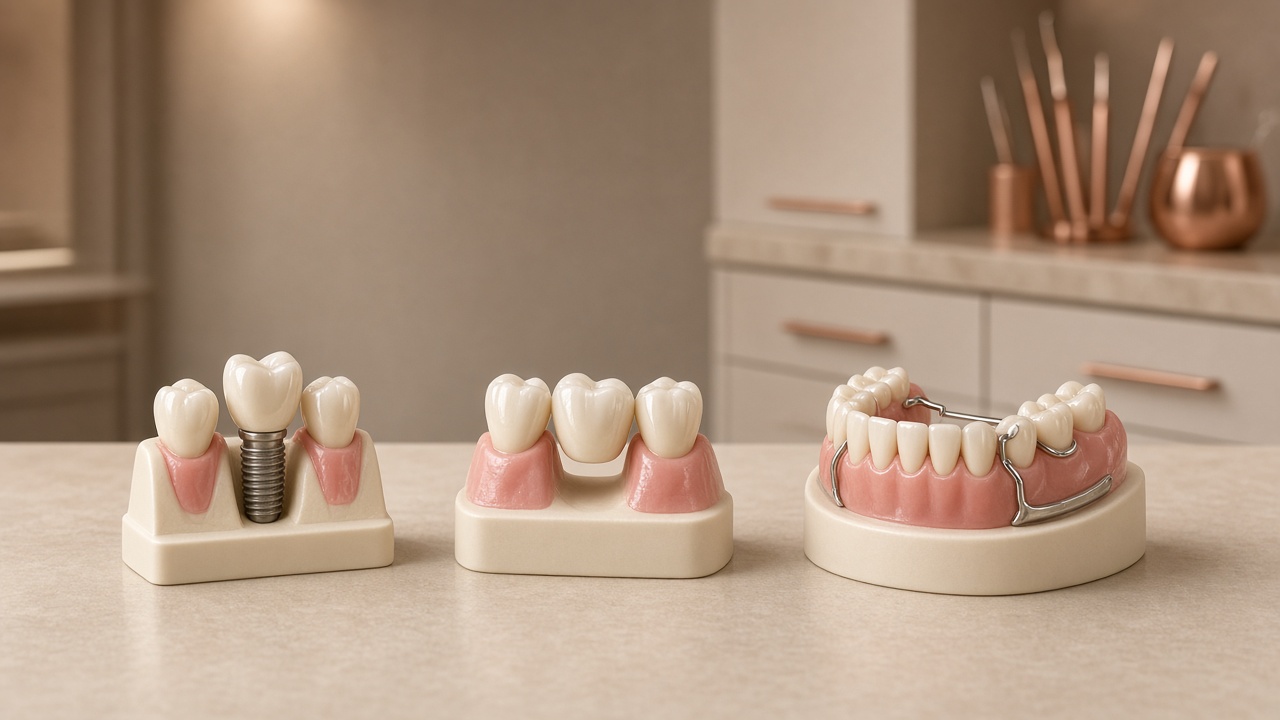
Urgent pain and disease are addressed before definitive reconstruction. Missing teeth may be replaced with implants, bridges or dentures, while damaged teeth may need bonding, onlays, crowns or root canal care. Orthodontics can sometimes create a more conservative restorative path.
Temporary restorations or a trial smile allow the bite, speech, comfort and appearance to be tested. Adjustments made during this phase guide the final restorations and reduce guesswork.
Maintenance protects the investment
A rehabilitation needs daily cleaning, risk control and review. A protective night guard may be recommended for grinding, and high-risk teeth or implants may require shorter maintenance intervals.
Ask for the plan in stages, with the purpose, alternatives, expected limitations and maintenance of each stage explained. Complex care should still feel understandable.
Frequently asked questions
Is full-mouth rehabilitation only cosmetic?
No. It primarily addresses health and function across multiple teeth, while appearance is integrated into the restorative plan.
Does full-mouth rehabilitation require crowns on every tooth?
No. Treatment is selected tooth by tooth and may combine prevention, bonding, onlays, crowns, implants, orthodontics or no treatment where appropriate.
Written by
Dr. Suneeta Veeramachaneni, DDS, University of California, San Francisco
More about Dr. Suneeta Veeramachaneni, DDS, University of California, San Francisco