Filling, onlay or crown: choosing the right restoration
The best restoration conserves healthy tooth while giving enough strength for your bite. Size of damage—not preference alone—guides the choice.

Dr. Suneeta Veeramachaneni
15 October 2026 · 6 min read
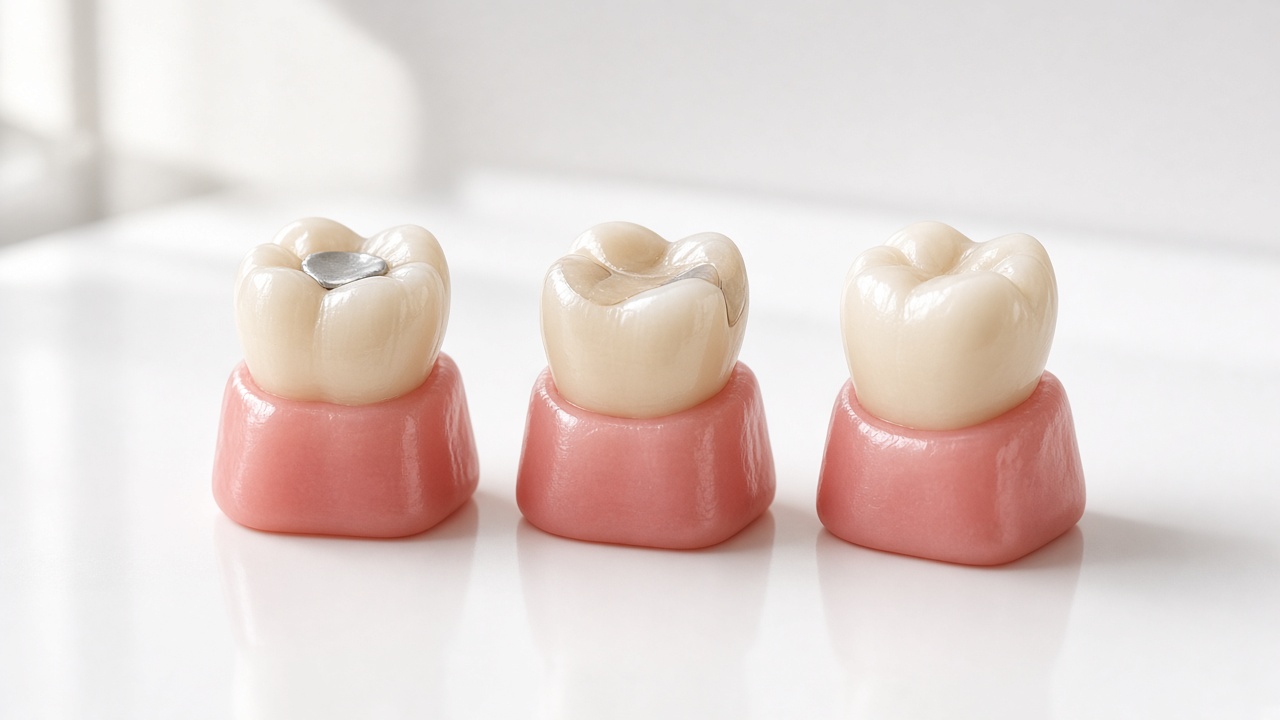
When part of a tooth is lost to decay or fracture, the replacement must seal out bacteria and survive chewing. A small defect may need only a filling. When walls are thin or a cusp is missing, an onlay or crown may offer a more predictable long-term result.
When a filling is enough
Fillings restore limited cavities where surrounding enamel and dentine remain strong. Modern tooth-coloured materials bond to the tooth and can be placed in a single visit for many lesions. Success depends on isolation, remaining structure and a balanced bite.
Very large fillings can flex and crack remaining walls over time. If most of the chewing surface is already restoration, upgrading to a partial or full coverage restoration may be discussed before a cusp breaks.
Onlays as a middle path
An onlay covers one or more cusps while preserving more external tooth than a full crown. It is useful when strength is needed but enough healthy tooth exists to avoid full circumferential preparation. Materials are often ceramic or high-strength composite fabricated indirectly.
Onlays require careful planning of margins and bite contacts. Not every clinic or case is suited to them; your dentist explains whether the defect geometry supports this option.
Full crowns for heavily compromised teeth
Crowns encircle and cover the visible tooth, protecting cracked or root-treated teeth that would be unsafe with a large filling. They demand more preparation but can restore form when little natural structure remains.
Ask why a particular option is recommended, what happens if you wait and how each choice affects future retreatability. At Krest Dental, restorative decisions start with how much healthy tooth can be preserved safely.
Frequently asked questions
Is a crown always better than a big filling?
Not always. A crown is better when remaining walls cannot reliably support a filling under bite force. Oversizing treatment is avoided when a conservative restoration is structurally sound.
Do onlays take more than one visit?
Many onlays are made outside the mouth and need a temporary stage, though some digital workflows can complete suitable cases more quickly. Your dentist will outline the sequence for your tooth.
Written by
Dr. Suneeta Veeramachaneni, DDS, University of California, San Francisco
More about Dr. Suneeta Veeramachaneni, DDS, University of California, San Francisco