Teeth grinding at night: signs, risks and night guards
Clenching or grinding while you sleep can wear enamel, crack fillings and strain the jaw. Early protection often prevents larger repairs.

Dr. Suneeta Veeramachaneni
20 September 2026 · 5 min read
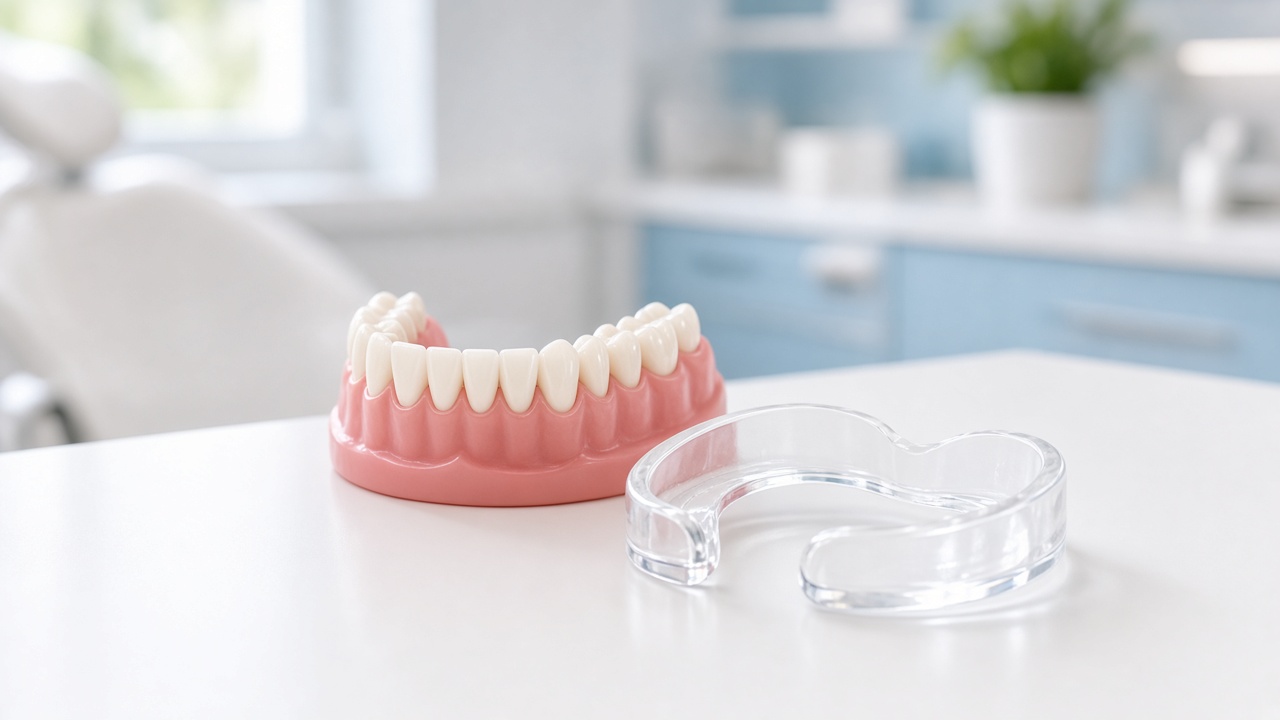
Many people grind or clench their teeth during sleep without knowing it. A partner may notice the sound, or you may wake with jaw stiffness, headaches or tooth edges that look flatter than before. Left unchecked, bruxism can shorten teeth, loosen restorations and overload the jaw joints.
Common signs of night grinding
Worn, chipped or sensitive teeth, cracked enamel, indentations on the tongue or cheeks, morning jaw fatigue and temples that ache on waking are frequent clues. Some patients only discover the habit when a filling or crown fractures under excess force.
Stress, sleep quality, airway issues and an uneven bite can contribute. The dentist looks at wear patterns, muscle tenderness, joint comfort and your restorations before recommending protection or further evaluation.
How a night guard helps
A custom night guard creates a protective layer between the upper and lower teeth so grinding force is absorbed by the appliance rather than enamel or ceramic. Soft over-the-counter trays can be a temporary stopgap, but a well-fitted hard or dual-laminate guard is usually more stable for long-term wear.
The guard does not always stop the habit itself; it reduces damage while contributing factors are addressed. Stretching, stress management, sleep assessment or bite adjustment may be discussed when they are clinically relevant.
When to book an assessment
Seek advice if you notice progressive wear, cracked teeth, unexplained morning headaches, clicking or locking of the jaw, or if a partner reports grinding sounds. Early intervention is often simpler than rebuilding multiple worn teeth later.
At Krest Dental in MVP Colony, Visakhapatnam, grinding assessment includes a clinical examination and, when needed, imaging or a custom appliance plan tailored to your bite and restorations.
Frequently asked questions
Can a pharmacy mouthguard replace a custom night guard?
Boil-and-bite guards may offer short-term cushioning, but an ill-fitting tray can feel bulky, shift during sleep or place uneven force. A custom guard is usually preferred for regular grinding.
Will a night guard stop me grinding completely?
Not always. Its main role is to protect teeth and joints from the force of grinding while contributing factors such as stress, sleep or bite issues are reviewed.
Written by
Dr. Suneeta Veeramachaneni, DDS, University of California, San Francisco
More about Dr. Suneeta Veeramachaneni, DDS, University of California, San Francisco